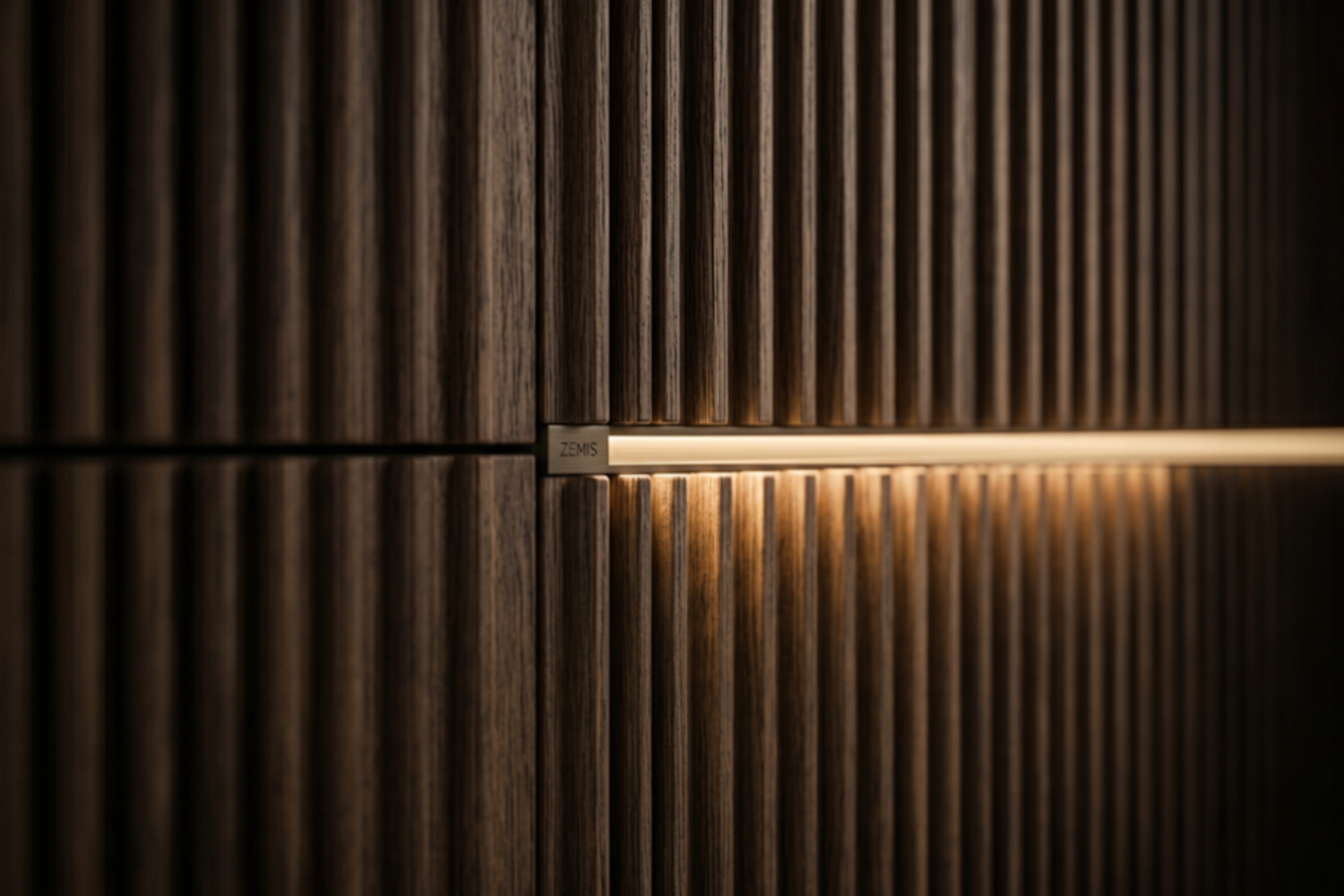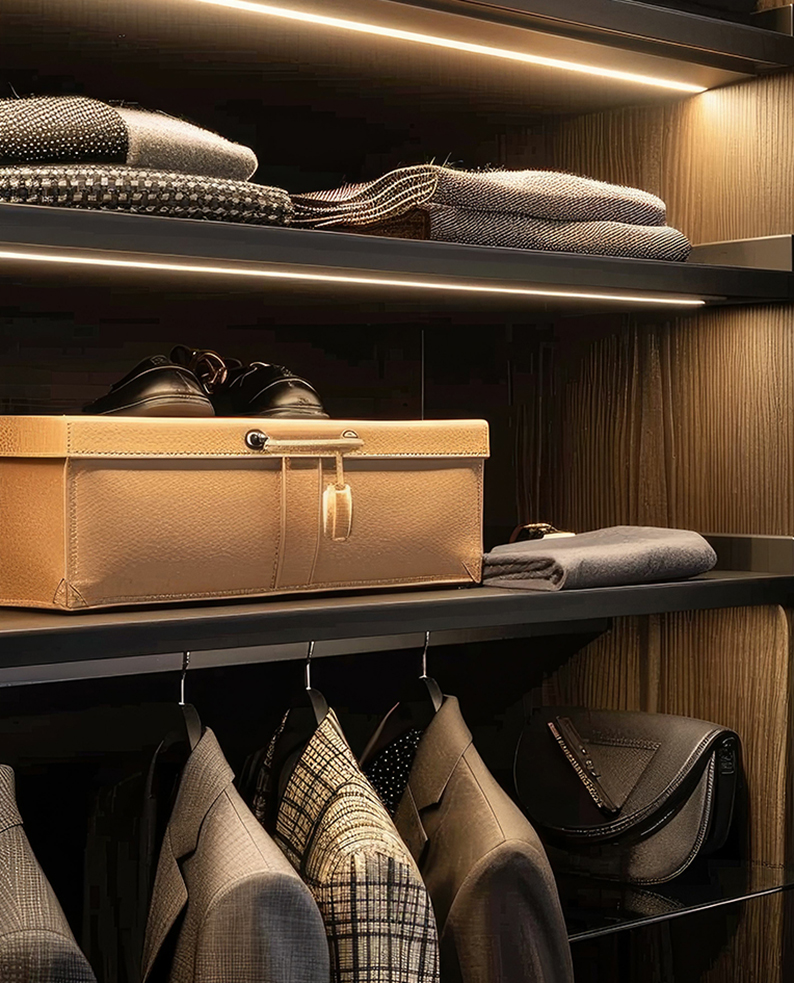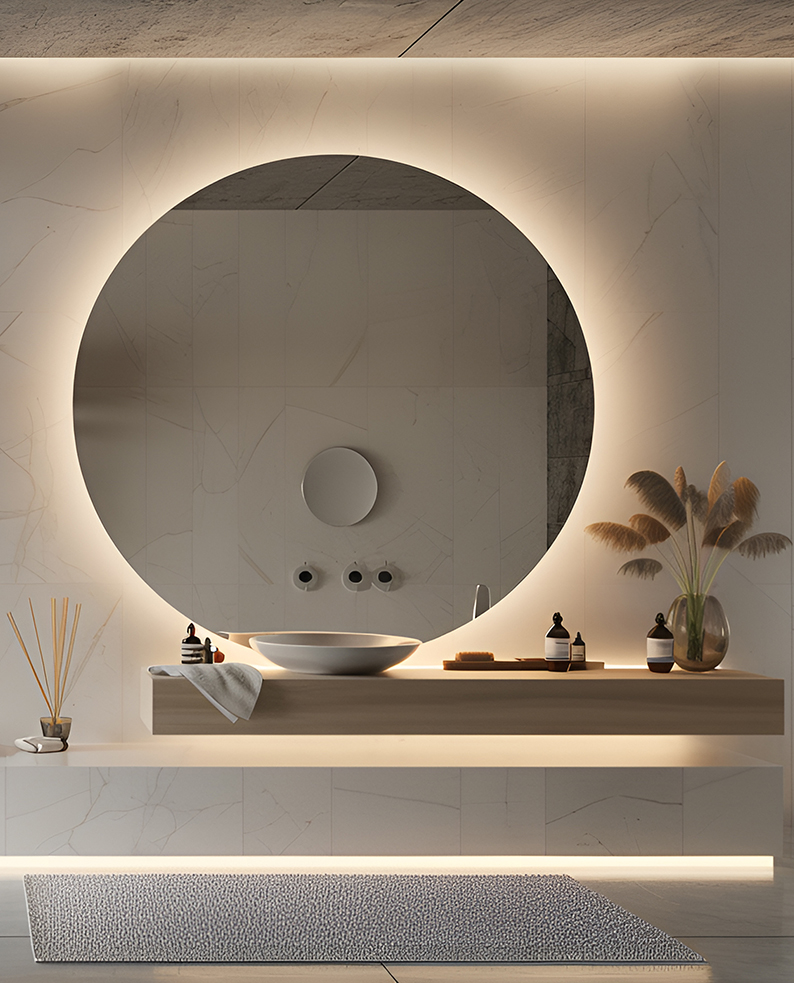
In contemporary design, light is no longer introduced into a space as an add-on. Increasingly, it is developed alongside the furniture, following its geometry, working within its thicknesses, enhancing materials and supporting the way each space is used every day.
In this context, an LED strip is not simply a light source. It is a design tool: discreet, flexible and easy to integrate, capable of shaping several layers of light within the same space.
This is the principle behind layered lighting: rather than lighting everything in the same way, the aim is to create a balance between ambient, task and accent lighting. Three distinct functions that transform flat, uniform illumination into light that is fully consistent with the design.
Designing in layers: ambient, task and accent
Layered lighting is based on the combination of three main layers.
- Ambient lighting provides the general illumination that makes the space readable as a whole.
- Task lighting is functional light designed for a specific activity.
- Accent lighting, by contrast, establishes visual hierarchies and draws attention to selected details.
The quality of the result depends on how these three layers interact. General lighting can make a space comfortable, but it is not enough to illuminate a shelf or counter effectively. Functional lighting may be technically flawless, yet feel cold without a softer layer to complement it. Accent lighting can enhance a detail, but becomes overpowering if it is not balanced with the rest of the space.
When correctly integrated and designed together with the furniture, LED strips make precisely this possible: distributing light where it is needed, allowing it to disappear when it should not take centre stage, and making it part of the overall composition.
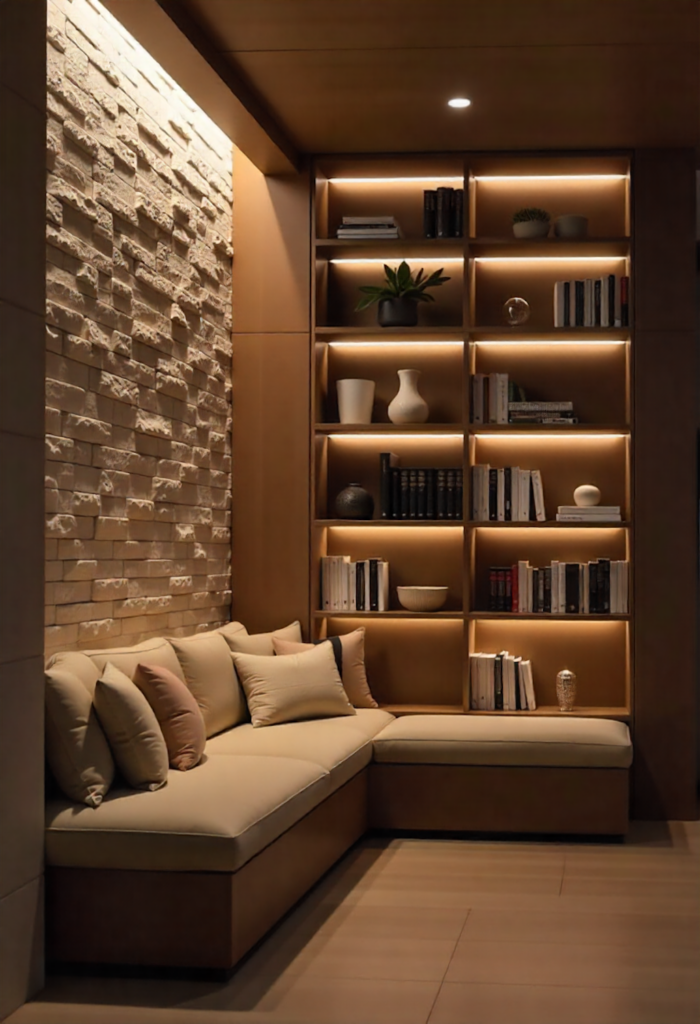
Ambient lighting: the layer that unifies the space
Ambient lighting is the foundation layer, shaping the overall perception of the space.
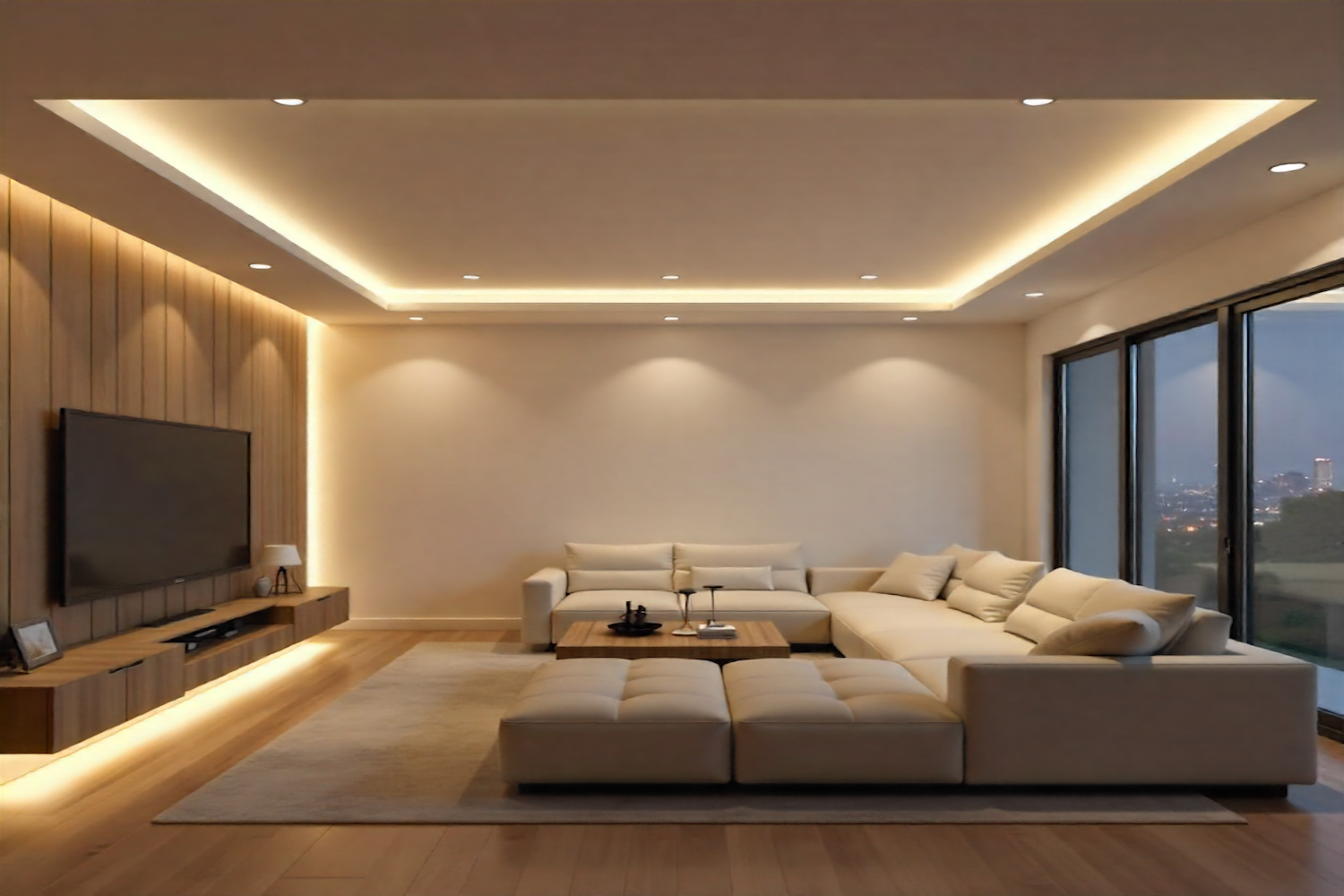
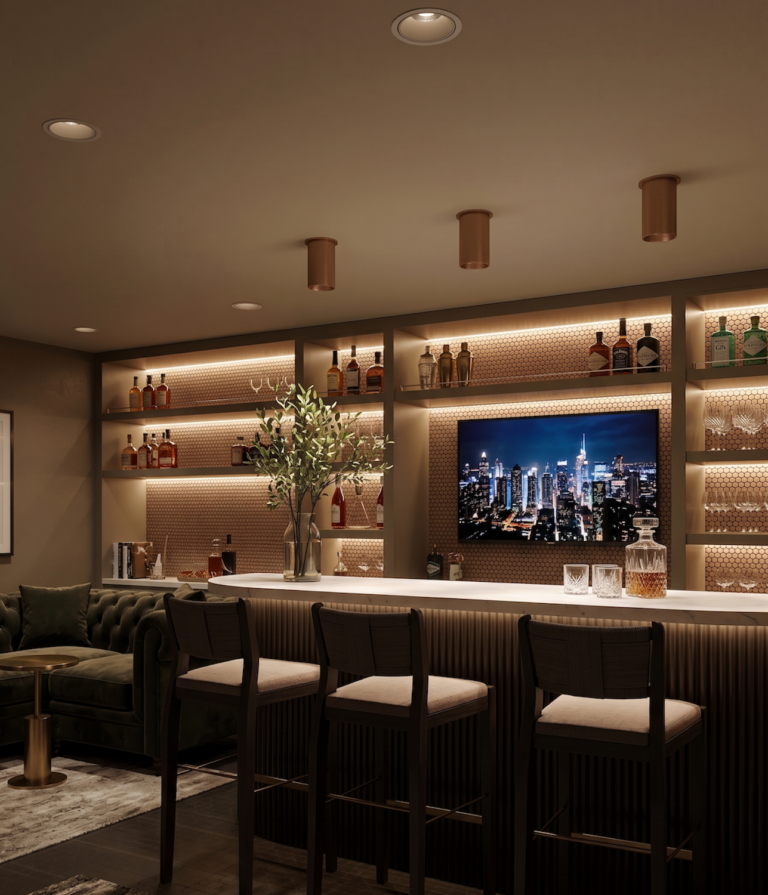
In furniture and interior design, it may take the form of indirect light running along wall panelling, a linear profile set into a recessed channel, a luminous cut above a fitted wall unit, or continuous lighting integrated into a cove, soffit or architectural element.
In these applications, the LED strip often works without revealing itself. The source remains concealed, while the lighting effect creates continuity throughout the space.
In a retail setting, for example, it can follow the lines of a bookcase or fitted wall unit. In hospitality projects, it can help shape the atmosphere of a lobby or lounge without introducing visually intrusive luminaires.
Here, the choice involves more than colour temperature or power. The distance from the reflective surface, the depth of the profile, the type of diffuser, the setback of the light source and the ability to dim the system all play a decisive role.
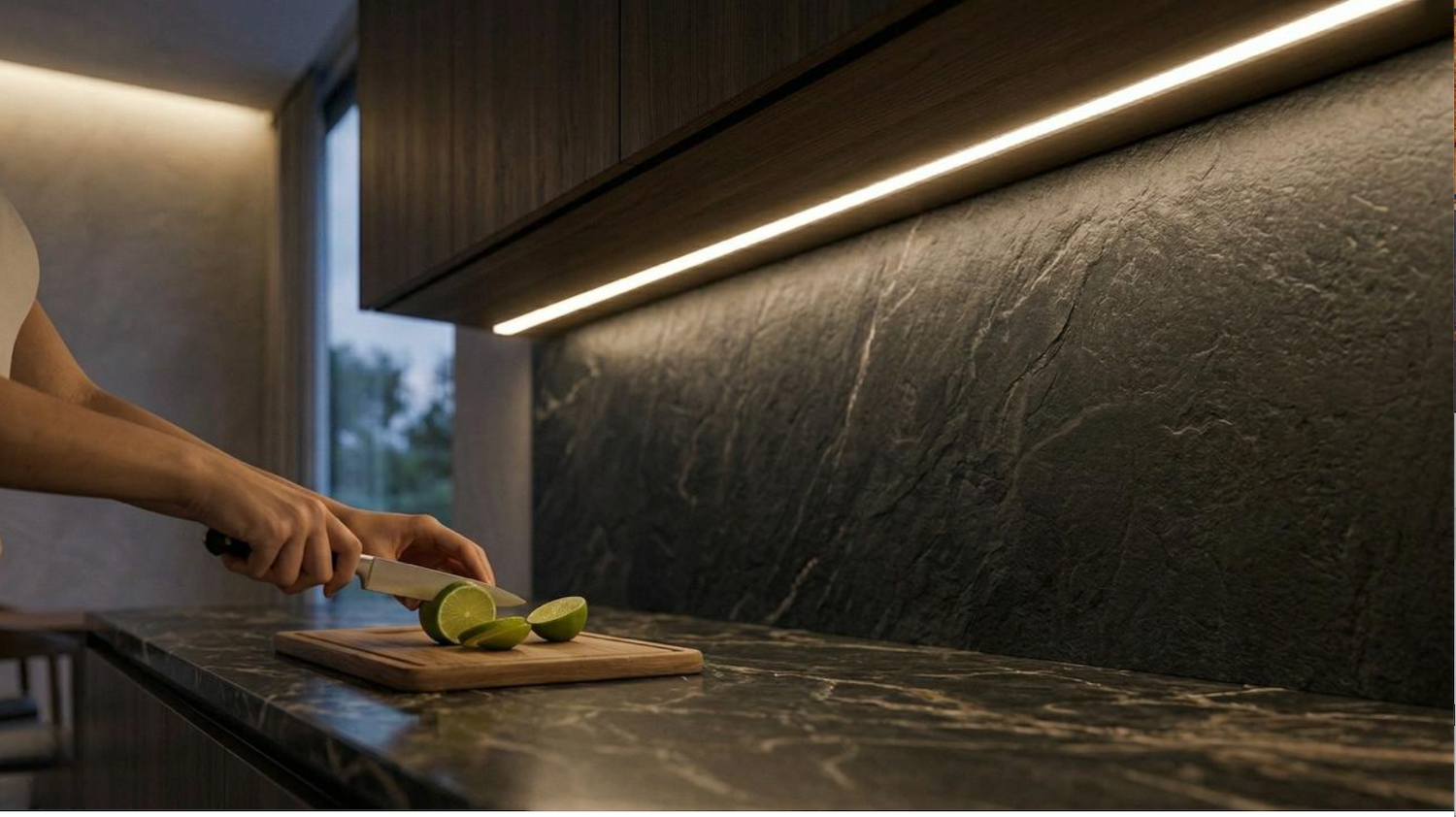
Task lighting: light exactly where it is needed
Task lighting is the most practical layer of a layered lighting scheme.
In furniture design, it means illuminating a worktop, an under-cabinet area, the inside of a wardrobe, a drawer, a tall kitchen unit, a bookcase, a desk, a sales counter or a service area.
In retail, for example, it is required at checkouts, consultation desks, fitting rooms, operational areas and anywhere light needs to support an action rather than simply enhance the space.
For this reason, task lighting cannot be treated as decorative light. A high-performance LED strip installed in the wrong position or paired with an unsuitable profile may be less effective than a more restrained solution that has been designed properly.
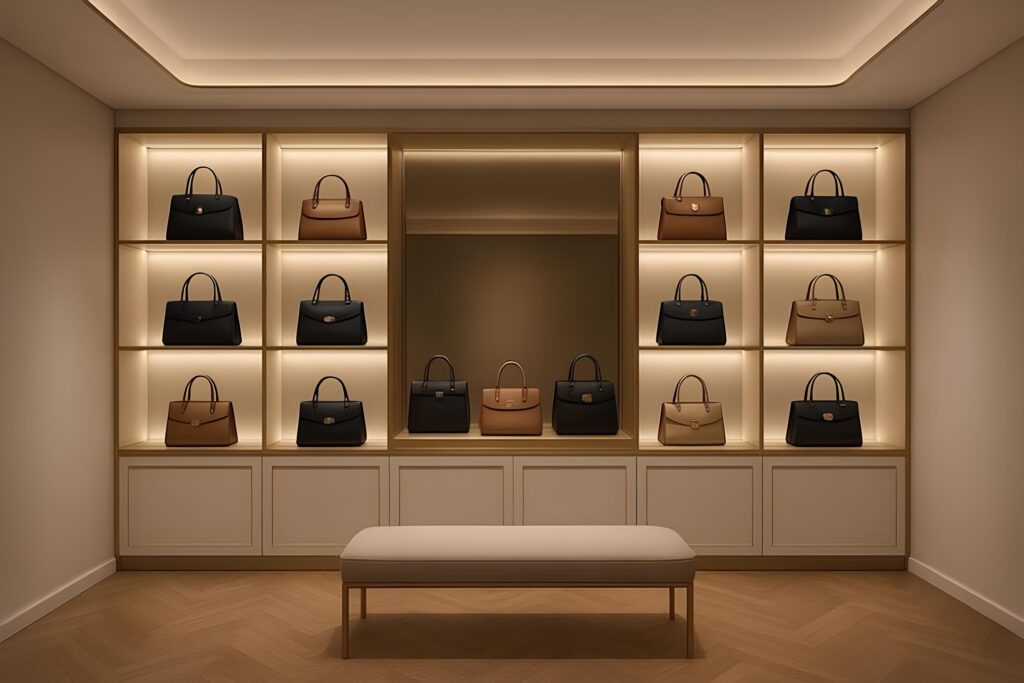
Accent lighting: light that guides the eye
Accent lighting creates depth. Its purpose is not to illuminate everything, but to decide what should stand out.
In retail, it becomes a tool for establishing hierarchies between different areas of the store. In hospitality, it gives character to circulation spaces, counters, decorative walls and architectural details. In high-end residential projects, it can turn a piece of furniture into a focal point without adding further objects to the composition.
With LED strips, accent lighting can be extremely subtle. A line of light behind a shelf, grazing light across a material, a profile set back within a niche or a source concealed behind a volume: the effect is often more compelling when the luminaire itself remains unseen.
At this layer more than any other, light must be designed together with the material.
An LED strip alone does not make a lighting design
An LED strip is a light source: the design begins when it becomes part of a system.
The profile is not simply an accessory. It integrates the strip into the furniture, protects it, dissipates heat, directs the beam, controls the visibility of individual LEDs and creates a cleaner installation.
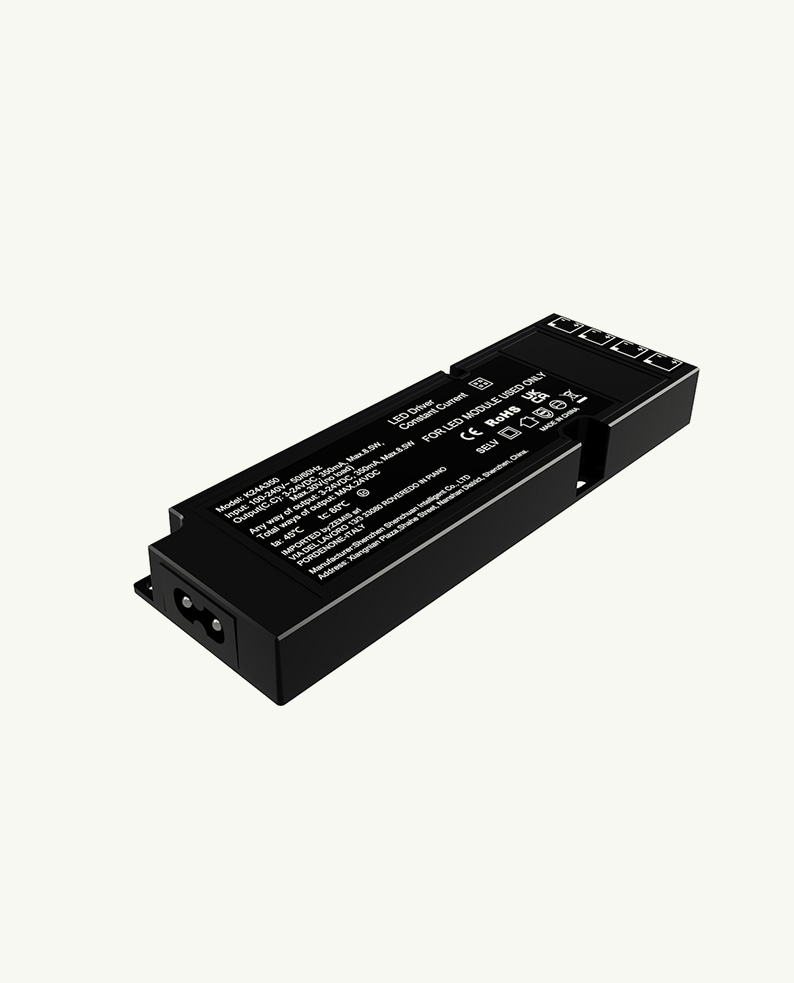
The diffuser affects the continuity of the light. The position of the source determines shadows, reflections and visual comfort. The driver and control system define how the lighting will be used over time. Cable routing, connector exit points and access for inspection or replacement are also part of the design, particularly when lighting is integrated into bespoke furniture or production ranges.
Furniture designers know that a single millimetre can change everything.
This is why the object being designed is not simply “an LED strip”. It is a complete system comprising the light source, profile, diffuser, power supply, controls, fixing method, wiring and its relationship with the material.
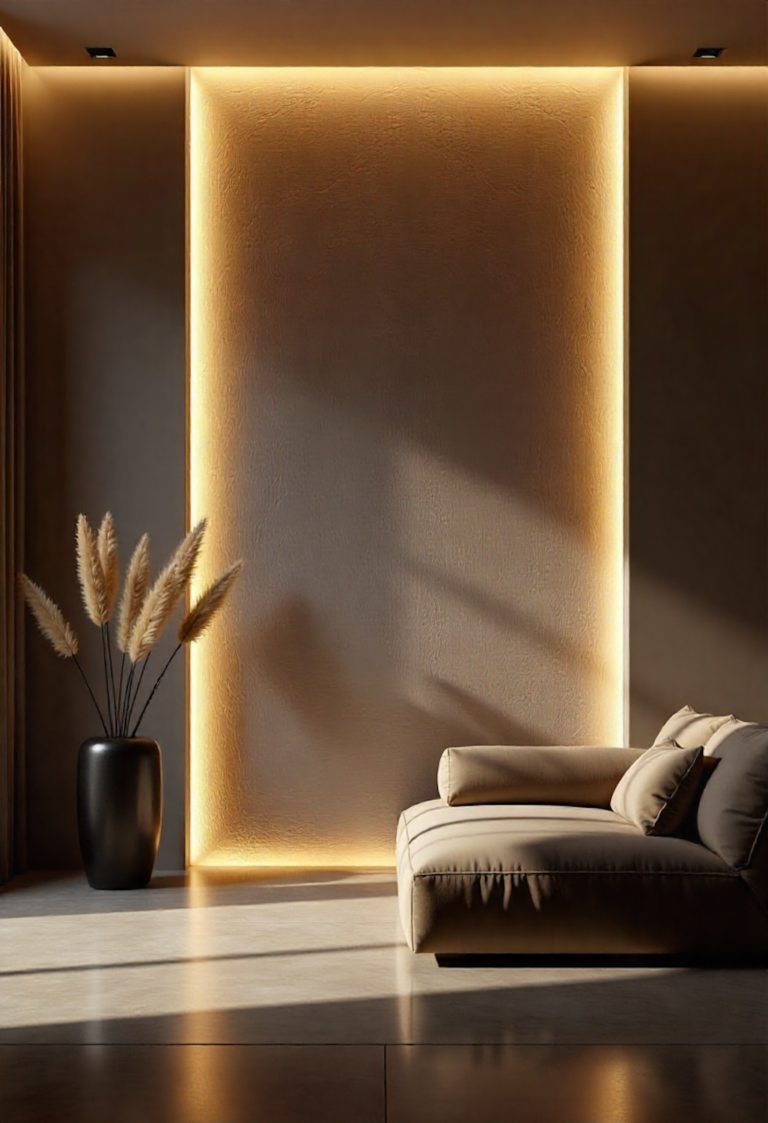
Visual comfort: the dotting effect, glare and materials
In layered lighting, visual comfort is where the quality of the design becomes truly apparent. Light may be technically correct on paper yet still feel wrong in use.
The dotting effect is one of the first signs of an unresolved lighting solution. When individual LEDs remain visible, the luminous line loses continuity and the integration appears less refined, particularly in exposed applications or on reflective surfaces.
Alongside the dotting effect, glare is the other major risk. Inside a wardrobe, bookcase or open compartment, the source can easily enter the user’s field of view. A profile positioned too far forward, an overly exposed strip or an insufficient angle can turn functional lighting into a source of discomfort.
Materials require separate consideration. The same strip, with the same output and colour temperature, may appear soft against a textured surface and overly prominent against a reflective one.
Integrated lighting should therefore never be assessed solely in technical section drawings. It must also be considered in relation to the viewing angle, finish, distance from the surface and the way the user will experience the space.
Controls and scenes: when layers create atmosphere
Mood lighting is not a separate fourth layer. It is the result of how ambient, task and accent lighting are balanced.
The same lighting composition can change completely through different intensities, separate switching, dimming and programmed scenes. Functional lighting can operate at full output during working hours and become softer in the evening. Accent lighting can highlight a product while a space is open to the public, then shift to a more discreet presence outside peak hours. Ambient lighting can support the space without dominating it.
Controls should therefore never be added only once the design is complete. Drivers, sensors, touch controls, wireless systems, dedicated switching circuits and dimming strategies contribute to the quality of the solution just as much as the profile or light source.
When each layer can be controlled independently, light is no longer a fixed condition: it becomes an active part of the space.

From product to system: the role of co-design
In a professional project, the value of an LED strip cannot be measured solely in watts per metre, lumens or colour temperature. Its true value lies in its ability to become part of the furniture.
The starting question should therefore not be “which LED strip should we choose?”, but “what lighting system does this project require?”
Should the light be continuous or localised? Direct or indirect? Functional or accent? Visible or fully integrated? Does it need to enhance a material, guide a route, illuminate a worktop, make a compartment clearly visible or create atmosphere?
Answering these questions requires lighting expertise, but also an in-depth understanding of furniture: panel thicknesses, routed grooves, fixings, finishes, tolerances, wiring, assembly and maintenance. This is where a supplier moves beyond simply supplying products and becomes a technical design partner.
For manufacturers and designers working across furniture, retail, contract, residential or marine interiors, integrated lighting performs at its best when it is developed with the product, not added afterwards. Ambient, task and accent lighting thus become three practical tools for creating spaces that are more legible, more functional and more closely aligned with the identity of the furniture design.