From the high-density display wall of a sports shop to the sparse layout of a boutique, the lighting design evolves in tandem with the product, the materials and the character of the space.
When it comes to lighting a clothing or footwear shop, there is no one-size-fits-all solution. A wall displaying dozens of trainers requires a light distribution capable of ensuring the entire range remains clearly visible; a pair of leather court shoes or a handbag, displayed individually, can instead be showcased through more selective lighting accents.
In sports retail, the scope widens even further. Alongside clothing, there may be skis, helmets, balls, rackets, towels and equipment with very different finishes and dimensions.
The product, material and display method therefore become key parameters in the lighting design.
In our in-depth feature on retail lighting design, we analysed the role of light in the overall design of retail spaces. In this article, we narrow the focus to fashion, footwear, accessories and sports, examining how lighting integrated into the furnishings can cater for display methods that are very different from one another.
Lighting a shop starting with the product
Understanding how to light a shop selling clothing, footwear or sports goods means, first and foremost, observing where the product is positioned and how the customer will perceive it.
General lighting defines the space and makes its pathways clear, but it can prove insufficient when merchandise is distributed across wall units, racks and shelves at different heights. On the lower levels, in particular, the quantity and direction of light coming from the ceiling may no longer be adequate.
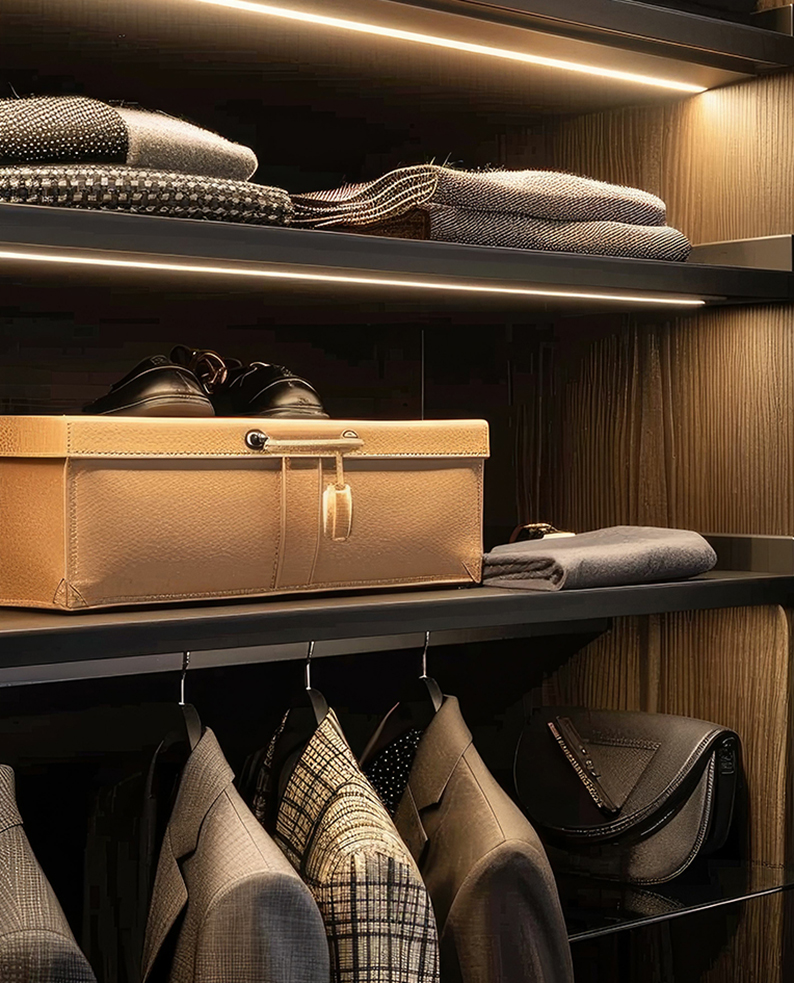
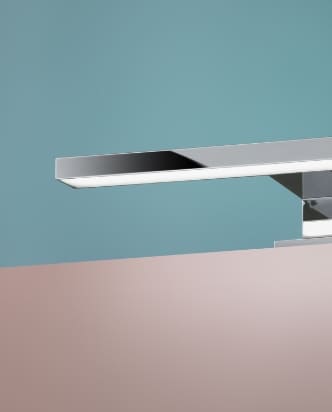
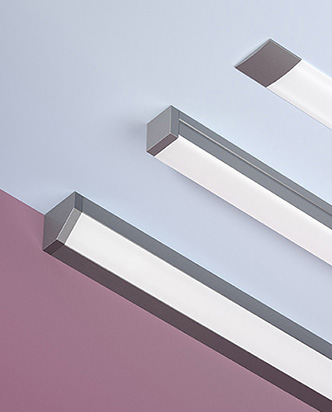
Integrating LED profiles into the shop fittings allows the light source to be positioned closer to the display surface and enables more precise control over the light distribution. The light thus becomes an integral part of the furniture, rather than an element added later.
This is one of the most interesting principles in LED lighting for shops: intervening at the point where the product is actually displayed, calibrating the light output and position of the light source to the structure of the furniture.
But even within the same product category, the result can vary considerably.
Sport and high fashion: two contrasting approaches to creating a visual hierarchy
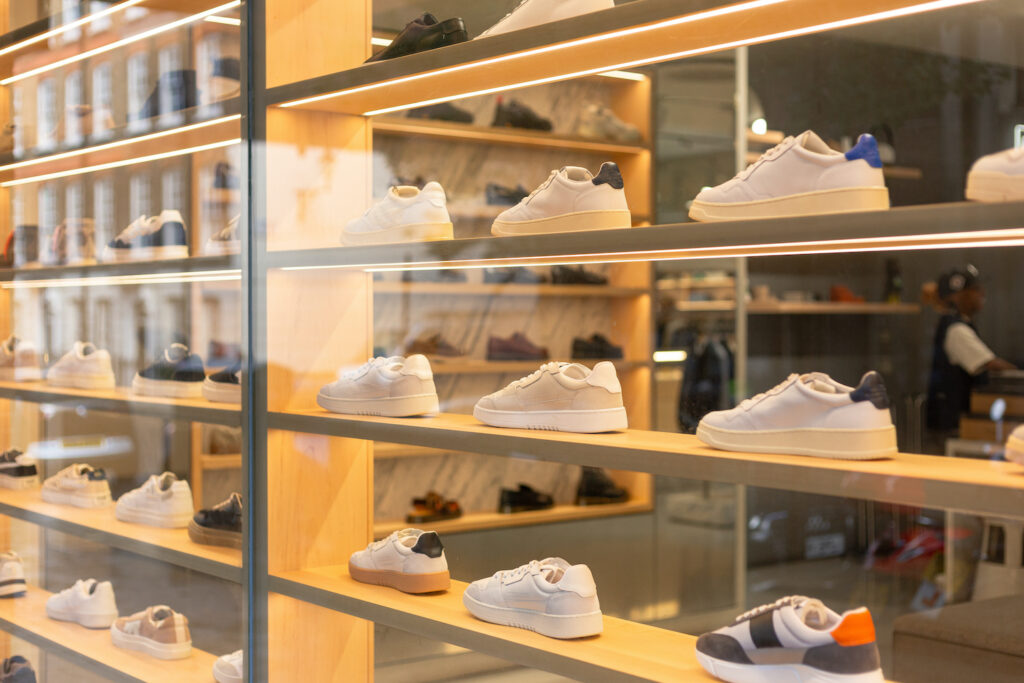
When designing a trainers’ shop, a wall can display dozens of models, arranged on a tight sequence of shelves. This is the classic example of a ‘sneaker wall’, where the visual impact stems from the repetition and variety of the range.
Here, the lighting must maintain continuity across the entire surface, ensuring that no levels are less clearly visible and that excessive shadows do not disrupt the sequence of products. The light source integrated into the shelf allows the display to be tailored directly, making shapes, colours and details recognisable even within a very dense arrangement.
A boutique, on the other hand, often operates on the opposite principle.
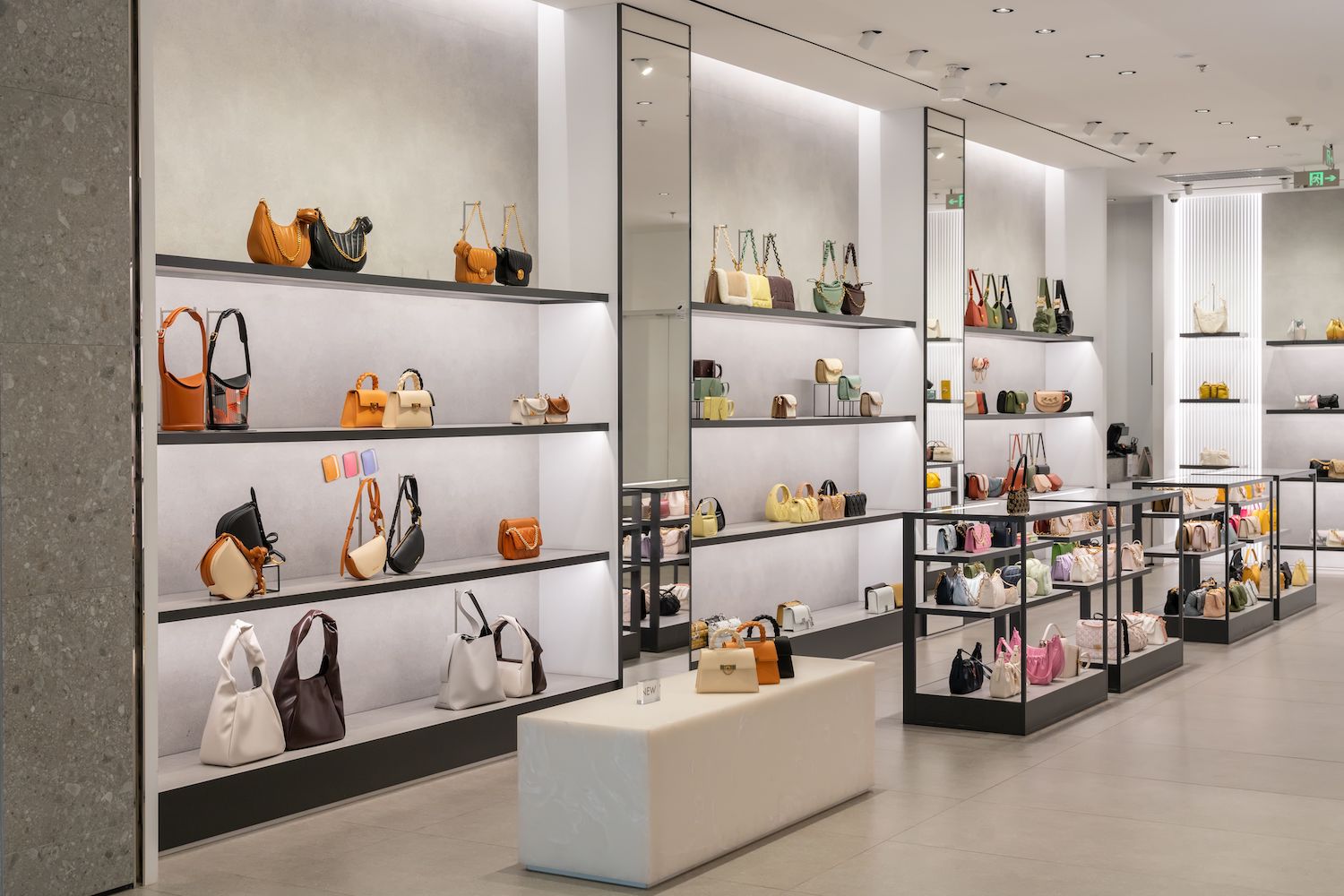
A handbag, a pair of high-heeled shoes or a pair of high-end shoes may be isolated within a niche or occupy an entire display level on their own. The empty space around the product becomes part of the composition, and the light can create a more pronounced contrast, shaping its volume and visually separating it from the background.
From the uniform presentation of a wall to the almost museum-like showcasing of a single object, it is the hierarchy of the display that determines the role of light.
Lighting for shoe shops: shape, materials and colour temperature
In footwear, the perception of the product hinges on very precise details. The profile, upper, stitching and finishes must remain clearly visible even when numerous models are displayed on the same wall.
However, the type of footwear alters the desired result.
A technical trainer may combine fabrics, mesh, reflective inserts and saturated colours. A classic shoe or a court shoe, on the other hand, derives part of its perceived quality from the nuances of the leather, the surface finish and the depth of colour.
In this context, colour temperature also becomes a design tool. Warmer light can complement the shades of leather and natural hides, emphasising their texture and contributing to a more intimate atmosphere. In sportswear or streetwear contexts, technical materials and brighter colour palettes may require light with different characteristics.
There is therefore no automatic correlation between a product category and a specific colour temperature. CCT, colour rendering index, optics and light direction must be assessed in relation to the material and the identity of the space.
The display fixture also influences the design: a glass shelf, a textured wall or a recess require different integration methods and specific control of the light source.
Lighting for a clothing shop: colour and visual comfort
In the fashion industry, the quality of light directly affects how garments are perceived.
Fabrics and colours must appear true to life and be easily comparable even when viewed at close range. For this reason, the colour rendering index plays a central role in the lighting of a clothing shop: light sources with a high CRI minimise colour distortions and reproduce the shades of materials with greater accuracy.
However, the scenario changes depending on the store’s concept.
In sportswear lighting, one frequently encounters technical fabrics, reflective surfaces and highly saturated colours. A streetwear shop may build its identity around deep blacks, denim and graphics, whilst a boutique may favour more sophisticated materials and very subtle colour differences.
Even the way in which a garment is displayed affects the required lighting layout: a vertical row of hanging garments behaves differently to a stack of garments on a shelf.
Considering lighting and furnishings together allows these aspects to be managed right from the design stage, rather than relying solely on general lighting to showcase the product.
Bags, belts and leather goods: highlighting materials and details
For accessories, the scale and display method can vary even within the same collection.
A handbag placed on its own on a shelf can become the focal point of the display. In this case, more selective lighting allows you to highlight its shape, emphasise the texture of the leather and control how metallic details or glossy surfaces appear.
Belts and small leather goods, on the other hand, can be displayed in sequence. The priority then shifts to the clarity of the overall display and the ability to distinguish colours, finishes and materials correctly.
It is the same principle that distinguishes a ‘sneaker wall’ from a luxury display: visual density alters the balance between uniform lighting and accent lighting.
For leather and hide surfaces, colour temperature and colour rendering become particularly important, as they directly influence the perception of natural shades and texture.
Sports retail: illuminating products with different shapes
A sports shop is not necessarily a clothing shop with a trainers’ section.
Skis, rackets, helmets, balls and other equipment introduce shapes and surfaces that require a different approach.
A ski derives much of its presence from its vertical form; a helmet has curved surfaces that can cause reflections; a racket alternates between solid and hollow sections; a ball must be perceived in its three-dimensionality.
The arrangement of the light beam and the relationship between lighting integrated into the fittings and accent lighting therefore become part of the display design.
Here too, the design must be able to distinguish between areas dedicated to a comprehensive view of the product range and points where a new product, a collection or a particular range deserves greater prominence.
Lighting for shelves and displays: when light enters the furniture
Shelves, ledges and alcoves are among the areas where lighting and retail fit-out interact most closely.
The greater the number of display levels, the less effective it becomes to rely solely on ceiling-mounted light sources. The integration of linear profiles, on the other hand, allows light to be directed straight onto the display surface, keeping the light source discreet and allowing the product to take centre stage.
The light can be directed towards the merchandise or used to create a more indirect effect.
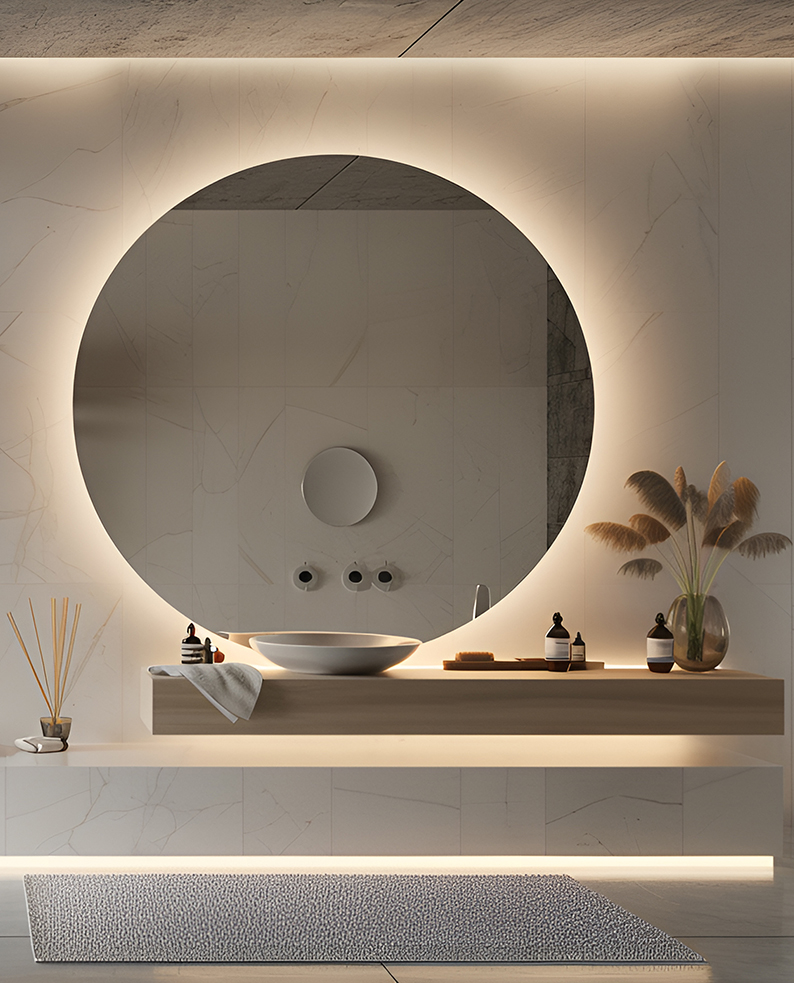
Backlighting, for example, can visually separate a shelf from the backdrop, increase the perceived depth of the wall and transform the structure of the display unit into part of the lighting composition.
The solution therefore depends on the furniture’s geometry and the design objective: to illuminate a sequence of products evenly, to highlight a texture, to define the outline of a recess, or to allow the light source to disappear almost completely within the furniture.
Accent lighting and spotlights: creating focal points
In a retail outlet, not every element needs to have the same visual prominence.
A new sneaker model, a bag from the main collection or a newly launched item of kit can become temporary focal points. Accent lighting allows you to create this hierarchy without indiscriminately increasing the light levels throughout the entire space.
The choice and positioning of spotlights for a clothing or footwear shop therefore also depend on the density of the display.
In a trainers’ shop, accent lighting can break up the uniform rhythm of the wall and draw attention to a specific item. In a boutique, where the display is already sparse, it can instead emphasise the presence of an individual product and the contrast with its surroundings.
Lighting that complements visual merchandising
Fashion and sport are sectors in which visual merchandising evolves rapidly.
Collections, campaigns and featured products change; a wall can be reconfigured, a shelf moved or part of the fittings repurposed for a new type of merchandise.
When lighting is integrated into the display system, the ability to modify the layout without having to redesign the connections each time becomes a practical necessity.
Flexibility is just as valuable in a sports shop, where categories and product ranges may occupy different spaces throughout the year, as it is in a fashion store that frequently updates its layout.
Lighting and fit-out as part of the same design
From the sneaker wall to the boutique, it is not the product category alone that determines the right lighting for shops.
What matters is the product, its surface, its colour, the density of the display and the way in which the furnishings relate it to the space.
General lighting shapes the overall atmosphere of the space; integrated lighting precisely highlights the display; accent lighting establishes hierarchies and focal points.
When these layers are designed together, lighting becomes part of the furnishings and the display language, enhancing the product without overshadowing it.
It is within this relationship between LED technology, furniture design and light quality that ZEMIS’s retail solutions find their place, developed to integrate with the furnishings and adapt to the specific requirements of each project.